

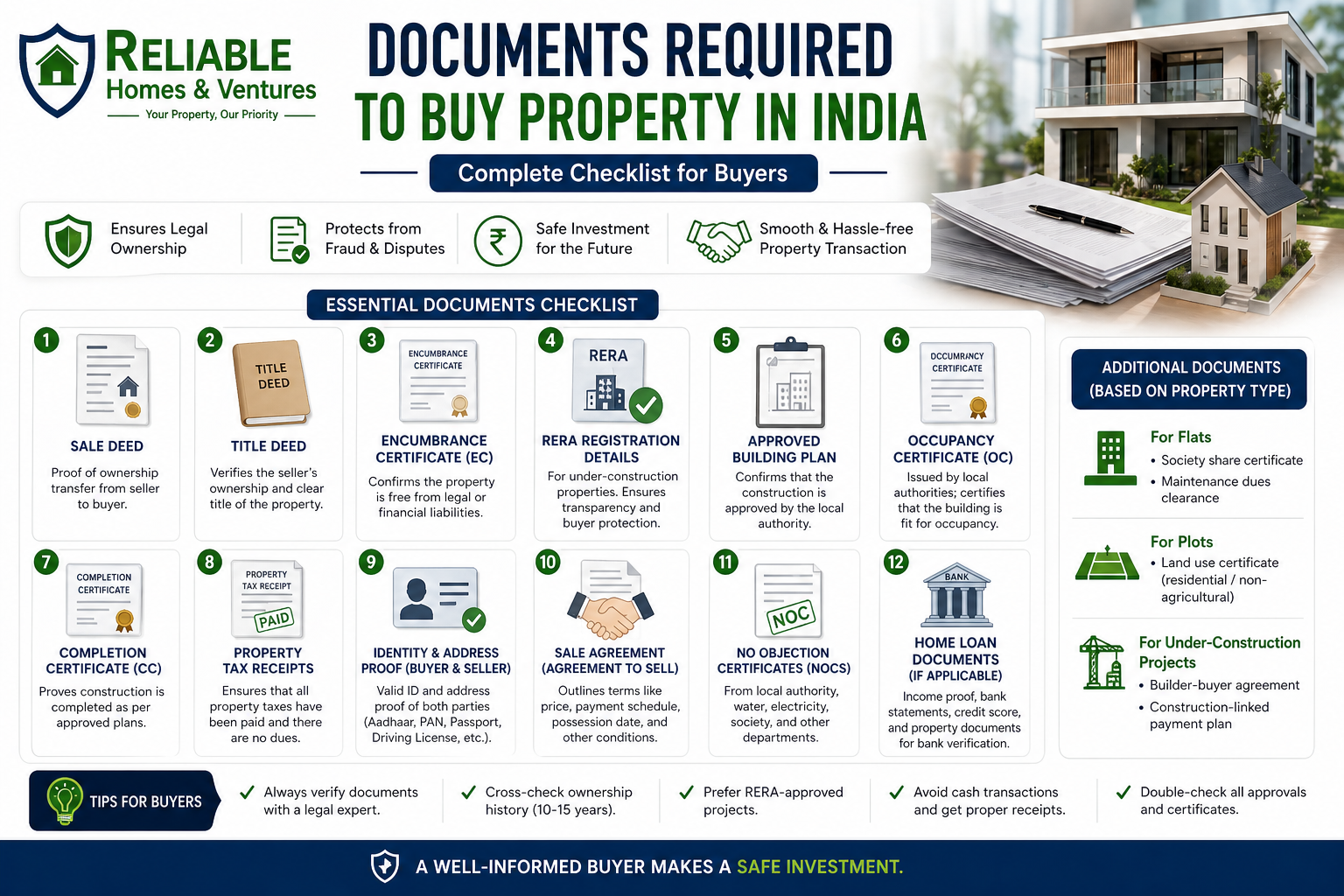
Buying a property in India is a major financial decision, and ensuring that all legal documents are in place is crucial for a safe and hassle-free transaction. Whether you are purchasing a flat, plot, or commercial property, verifying the required documents helps you avoid legal disputes, fraud, and future complications.
In this guide, we will walk you through the complete list of documents required to buy property in India, along with their importance and verification tips.
Why Document Verification is Important
Before finalizing any property deal, proper document verification is essential because:
- It confirms the legal ownership of the property
- Ensures the property is free from disputes
- Helps avoid fraud or illegal transactions
- Protects your investment in the long run
Skipping this step can lead to serious legal and financial risks.
Essential Documents Required to Buy Property in India
1. Sale Deed
The Sale Deed is the most important legal document in a property transaction. It serves as proof of ownership transfer from the seller to the buyer.
Make sure:
- It is registered at the sub-registrar office
- All terms and conditions are clearly mentioned
2. Title Deed
The Title Deed verifies the seller’s ownership of the property and ensures that the title is clear (no disputes or claims).
Check:
- The seller has full rights to sell
- No legal disputes are attached
3. Encumbrance Certificate (EC)
The Encumbrance Certificate confirms that the property is free from any legal or financial liabilities such as loans or mortgages.
Ideally, check EC for the last 10–15 years.
4. RERA Registration Details
For under-construction properties, verify whether the project is registered under RERA (Real Estate Regulatory Authority).
This ensures:
- Transparency
- Timely delivery
- Legal protection for buyers
5. Approved Building Plan
This document confirms that the construction is approved by the local municipal authority.
Ensure:
- Layout and structure are legally approved
- No unauthorized construction
6. Occupancy Certificate (OC)
The Occupancy Certificate is issued by local authorities after construction is completed. It certifies that the building is safe and ready for occupancy.
Important for:
- Ready-to-move properties
- Legal possession
7. Completion Certificate (CC)
The Completion Certificate proves that the building has been constructed according to approved plans and regulations.
8. Property Tax Receipts
Always check the latest property tax receipts to ensure there are no pending dues.
This confirms:
- The seller has cleared all taxes
- No financial liabilities are pending
9. Identity & Address Proof (Buyer & Seller)
Both parties must provide valid ID and address proof such as:
- Aadhaar Card
- PAN Card
- Passport or Driving License
10. Sale Agreement (Agreement to Sell)
This is a preliminary agreement between buyer and seller that outlines:
- Price of the property
- Payment terms
- Possession date
11. No Objection Certificates (NOCs)
Depending on the property type, multiple NOCs may be required from:
- Local authority
- Water department
- Electricity board
- Society (if applicable)
12. Home Loan Documents (If Applicable)
If you are taking a home loan, the bank will require:
- Income proof
- Bank statements
- Credit score details
- Property documents for verification
Additional Documents for Specific Cases
For Flats:
- Society share certificate
- Maintenance dues clearance
For Plots:
- Land use certificate (residential/non-agricultural)
For Under-Construction Projects:
- Builder-buyer agreement
- Construction-linked payment plan
Tips for Safe Property Purchase
- Always verify documents with a legal expert
- Cross-check ownership history (at least 10–15 years)
- Avoid cash transactions
- Prefer RERA-approved projects
- Double-check all approvals and certificates
Common Mistakes to Avoid
❌ Not verifying title deed properly
❌ Ignoring encumbrance certificate
❌ Buying property without approved plans
❌ Skipping legal consultation
Conclusion
Understanding the documents required to buy property in India is essential for making a safe and informed investment. Proper verification not only protects you from legal risks but also ensures a smooth and transparent transaction.
Before finalizing any deal, take time to review all documents carefully and consult a legal expert if needed. A well-informed buyer is always in a stronger position to make the right decision.
Leave a Reply